

Video (Feedback) Don’t Lie
I thought I looked like Alcaraz—until I saw the footage.

Have you ever seen a video of yourself doing something you thought you were pretty good at, only to realize, painfully, that you are not? Yeah. That just happened to me on a tennis court. The video don’t lie, and like any good feedback loop, it’s what I needed to improve. It begs the question: How are you getting feedback in business and in life?
When it comes to sports, I’d call myself an average athlete. I can pick up most sports and be pretty good—not the best—but I can hold my own, compete, and be “one of the guys.”
A few years ago, I stumbled into tennis. My wife had been playing for a year, and the country club where we play hosted a mixed doubles night. She invited me to come.
[Up to that point, my only “tennis” experience was ping pong—basement battles amongst friends and brothers in northern Indiana winters (basements being a strange concept to my Southern friends—they do exist).]
So my wife and I went to mixed doubles night, and it turned out all those hours at the ping pong table actually helped. I wasn’t great, but I wasn’t awful either. I discovered I really enjoyed playing tennis, so I attended some more events. I suddenly found myself hooked on tennis, but I knew my ping-pong style wouldn’t carry me. So I signed up for a lesson.
I took exactly ONE lesson, and I joined the entry-level men’s team and was off to the races. My skills didn’t win matches, but my hustle did. I could track down balls like nobody’s business—and that effort often made the difference.
[Even now, I still surprise people with what I get to… although lately, wisdom (and a fear of losing an achilles’) has me pulling up short more often.]
In my head, though, I still look like Alcaraz or Sinner out there. Sure, I don’t have Alcaraz’s whipping forehand or Sinner’s silky two-handed backhand, but I’m tall, lanky… surely I resemble at least Sinner, right?
Years later, and just a few weeks ago, I have my answer.
A buddy and I played singles, and he brought along “SwingVision”—an app that records the match, tracks stats, the whole deal. After he beat me soundly, he sent me the video so I could relive the defeat over and over again.
And wow. It was brutal. Not the defeat, but watching myself play on video.
Who was that guy in the video? His left arm hung limp. His swing was spazzy and all arm—no core, no form. It looked like he was swatting flies with a pool noodle.
It was a gut punch.
But like with any bad feedback, I had two choices with my tennis reality:
(1) Stick my head in the sand.
(2) Do something about it.
I chose the latter.
I went to a pro and said, “I saw a video of my forehand, and I wanted to cry. Can you help?” For the past two weeks, I’ve been reworking my entire forehand. Shoulders turned, left arm active, using my core, racket back, with a beautiful windshield wiper-like follow-through—creating something that resembles an actual tennis stroke.
I haven’t watched myself on video again yet. But I can feel the difference. And I can see the difference. The ball moves differently. I move differently. It’s not perfect, but it’s progress.
Without feedback, we don’t change.
No scale? You won’t change how you eat.
No mirror? You won’t change how you look.
No bank statement? You won’t change how you save.
No video? You won’t know that you need to fix your swing!
Same is true in business. The higher you are (i.e. entrepreneur, owner)—the less feedback you get. No one’s holding up the mirror. No one’s telling you your swing sucks.
When I hired my first executive coach, I thought she’d help me deal with all the “crap out there.” Nope. She helped me deal with me. She helped me see the feedback I needed to see, and that was the best thing that ever happened.
That’s why great athletes hire coaches—they don’t hire them to focus on beating opponents, but to focus on getting better themselves. A great coach gives you feedback. Shows you what’s not working. Helps you see what could be.
Feedback is a gift. It might feel like a punch to the gut. But it’s a gift.
If you want to get better—at tennis, business, life, anything—don’t shy away from feedback. Invite it. Record the match. Look at the video. The video don’t lie.
And if you’re really brave? Do something about it.
What changed my life and business and tennis is when I hired a coach. I worked on me, and my business and life went from “eh” to “nice!”
And for tennis, I have no illusion that I’ll ever be Alcaraz. But I’m confident the pro is going to help me be the best version of tennis-me.
And so can you be your best version—with feedback—lots of feedback. Make sure you’ve got feedback in your life.
-Adam
$1mm Book Recommendation
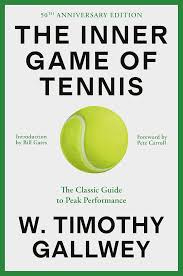
Don’t mistake this book for those who just like tennis.
The Inner Game of Tennis by W. Timothy Gallwey explores the mental side of performance, arguing that the biggest obstacles to improvement are not physical, but internal—self-doubt, overthinking, and judgment.
Like any good sports analogy…Gallwey’s observations on tennis apply to all parts of life. I highly recommend this book as it applies to life, to business, and to….tennis!
Concept Corner
We get a twofer today…The Inner Game of Tennis’ main concept:
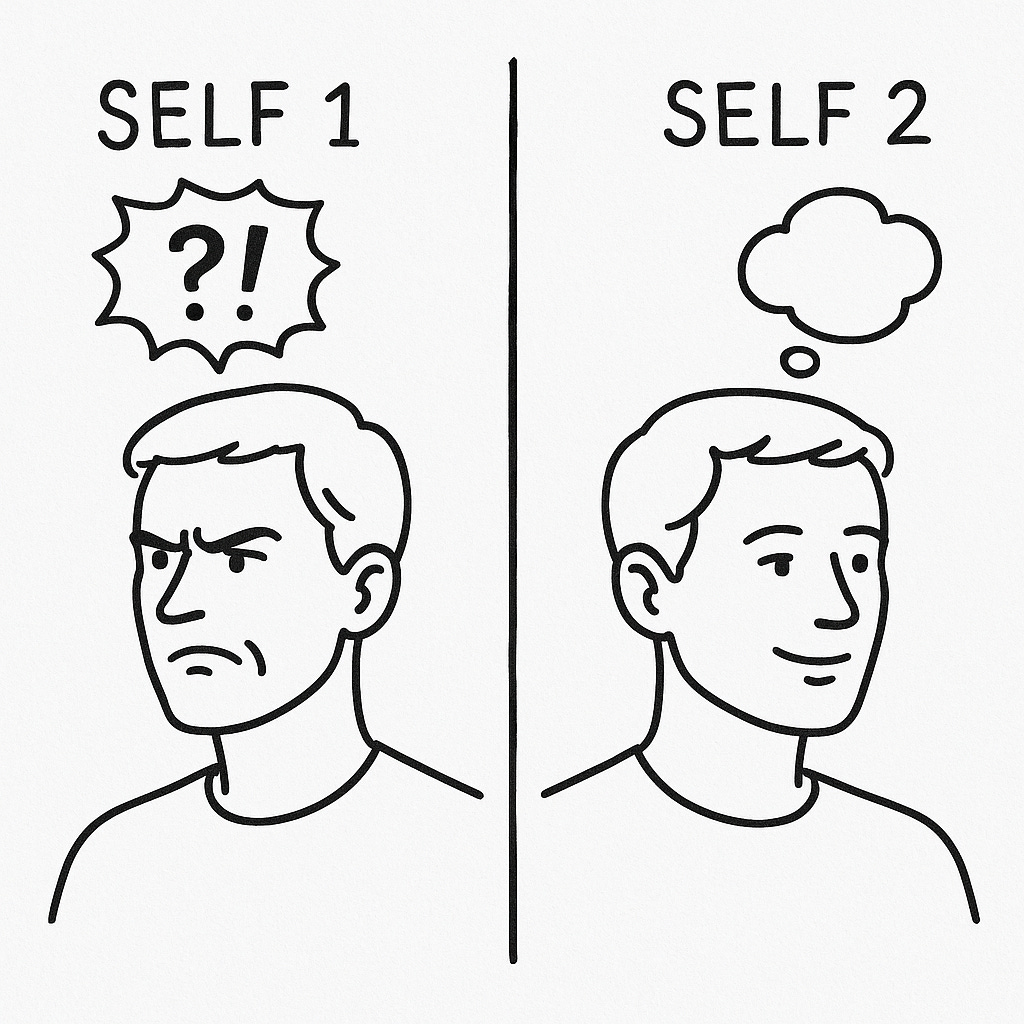
Gallwey introduces the idea of two selves: Self 1, the critical, controlling voice, and Self 2, the natural, intuitive performer. The book teaches that for excelling at what you do, it’s crucial to quiet Self 1 and trust Self 2. That’s where you find focus and unlock effortless, peak performance. Though it’s framed around tennis, the lessons apply to any discipline where mindset shapes outcomes. Think in the zone and in flow. It’s easier said than done, but this concept (and this book) helps you get there.